

Study evaluates organic weed control in California
Cover crop-based no-till methods improve weed control and soil moisture in organic pumpkins. Read the findings from Rodale Institute’s study.





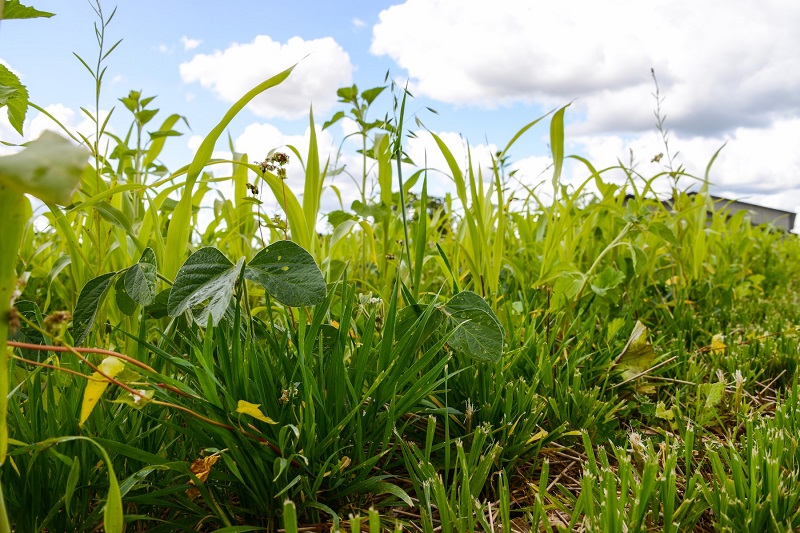
The Rodale Institute’s California Organic Center is exploring the use of cover crops and roller crimper technology as an alternative to tillage and plastic mulch in organic vegetable systems along California’s coast.
A recent research trial focused on organic pumpkin production in Ventura County tested whether integrating high-residue cover cropping with no-till practices could improve weed control, soil moisture retention and overall soil health. The project was funded by the California Department of Food and Agriculture’s Healthy Soils Program.
Two cover crop mixes — oat with vetch and oat with field pea — were evaluated. Each mix was terminated either through tillage or a roller crimper. A fallow control plot was included for comparison. The cover crops were seeded in March and terminated in June. Pumpkins were seeded directly into the soil following cover crop termination, without additional cultivation.
Thirty days after crimping, cover crop biomass was recorded at 2,256 pounds per acre for oat/vetch and 2,741 pounds per acre for oat/pea in no-till plots. Weed biomass was significantly lower in these treatments than in the control, suggesting that mulch from the cover crops effectively suppressed weed growth. Although some regrowth of vetch was noted, weed pressure remained lower in the crimped plots.
Soil moisture and temperature readings were taken from early July through late September and showed that no-till plots consistently held more moisture than tilled or control plots. For example, reading taken on August 3, 2023, show that the no-till oat/vetch treatment had 25.76% soil moisture compared to 19.59% in the control. Temperature readings showed slightly more buffering in the no-till plots, though differences were modest.
Pumpkin yield data collected at harvest showed that the no-till oat/vetch treatment performed best in terms of both fruit count and soil benefits. The control plot, which did not receive any cover crop, had the lowest yield.
Researchers say the findings support the use of cover crop-based no-till systems, especially those using oat/vetch mixtures, in organic vegetable production. Benefits include early-season weed suppression, improved short-term soil moisture retention and competitive yields.
The trial is part of a broader initiative by Rodale Institute to adapt regenerative organic practices to California’s unique climate and farming conditions. Additional research will focus on long-term impacts on soil biology and crop performance.