

Research identifies production challenges for organic greenhouse vegetables





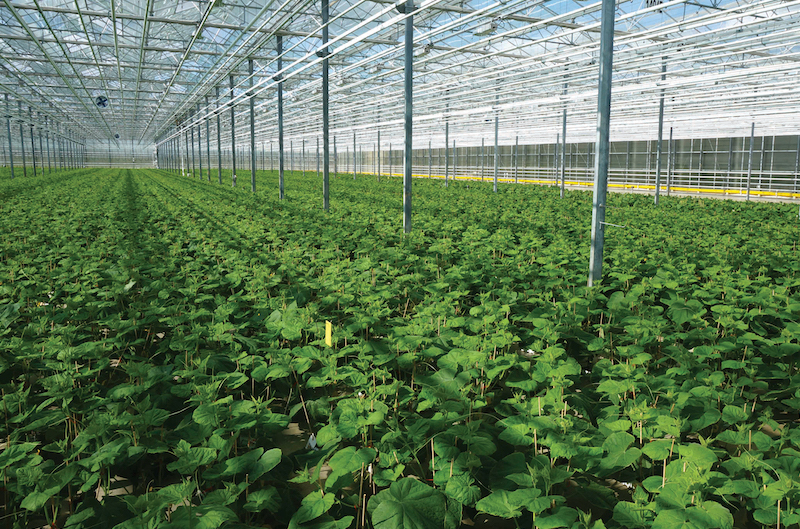
Nutrient availability, root-zone management and pest control remain major challenges for organic greenhouse vegetable production, according to a new international research review.
The review, accepted Nov. 22 by Frontiers in Horticulture, examines production systems for organic tomatoes, cucumbers and sweet peppers, focusing on the relationships among soil fertility, crop performance and greenhouse environmental conditions.
Researchers from institutions in Greece, the Netherlands and Germany evaluated existing studies on nutrient management, soil biology, crop quality, pest control and environmental sustainability.
The findings indicate that organic greenhouse productivity depends heavily on coordinating nutrient release from organic materials with crop demand.
Unlike conventional systems that can rely on readily available mineral fertilizers, soil-based organic systems depend more heavily on microbial activity to release nutrients.
This can create challenges when nutrient availability does not align with periods of rapid crop growth.
Nutrient management varies by crop
Researchers identified nitrogen availability as a particular concern for organic greenhouse cucumbers.
The review also highlighted the importance of phosphorus and micronutrient availability, root-zone aeration and soil biological activity.
Across the studies examined, reported organic yield reductions compared with conventional production ranged from approximately 15% to 30% for tomatoes, 20% to 40% for cucumbers and 0% to 15% for sweet peppers.
Researchers cautioned that the figures represent ranges from different studies rather than combined estimates from a single experiment.
Production outcomes varied depending on crop, cultivar, climate, soil conditions and management practices.
Prevention remains central to pest management
The review found that organic greenhouse pest and disease management relies heavily on preventive practices, biological controls and environmental management.
Limited treatment options after disease establishment make early detection and favorable greenhouse conditions particularly important.
Researchers also identified nutrient monitoring, improved prediction of nutrient availability and varieties adapted to organic production as priorities for future research.
The authors emphasized that evaluating organic greenhouse performance requires considering more than yield alone, including product quality, soil health, resource efficiency and economic resilience.
The review primarily examines European soil-based organic greenhouse systems. Production requirements and certification standards may differ for USDA-certified organic operations.
The research is available through Frontiers in Horticulture.