

Beyond sprays: Indiana farmer explores organic aphid management
OFRF-funded trial examines how plant health fits into an integrated strategy for managing aphids in high-tunnel tomatoes.





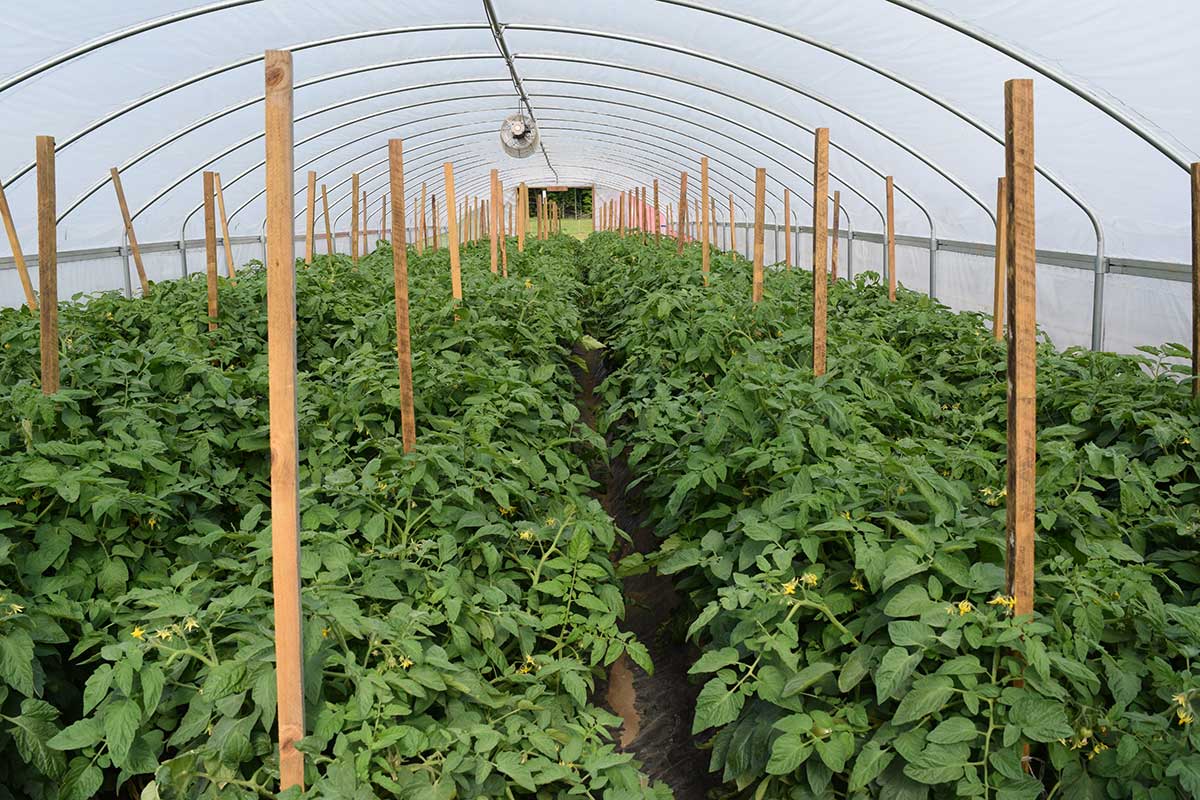
For organic vegetable growers, aphids can be one of the most persistent pests in high-tunnel tomato production. While biological controls and approved organic pesticides remain important tools, an Indiana grower is investigating whether improving plant nutrition can help reduce pest pressure before outbreaks begin.
Dan Perkins of Perkins’ Good Earth Farm (De Motte, IN) is participating in the Organic Farming Research Foundation’s (OFRF) Farmer-Led Trials Program to study the relationship between plant nutrition and health and aphid pressure. The project was highlighted in a recent article by Mary Hathaway, OFRF Research & Education Program Manager, and Perkins.
Perkins operates a certified organic diversified vegetable farm that utilizes no-till, permanent deep-compost beds and grows produce for a 200-member CSA, farm stand, commercial kitchen and wholesale markets. The farm also produces over 18,000 garlic bulbs annually.
Looking beyond direct aphid control
The trial focuses on a question many organic growers have considered: Why do aphid populations explode in some crops and not others?
Rather than viewing aphid management solely through the lens of suppression, Perkins is exploring whether nutritional imbalances may contribute to pest susceptibility. His hypothesis is that tomatoes with balanced nutrition may be less attractive or vulnerable to aphid infestations than stressed plants. The project will evaluate whether targeted foliar nutrition, guided by plant sap analysis, can improve plant health and thus potentially reduce aphid pressure.
Nutrition is one piece of IPM puzzle
While the project examines nutrition-based prevention, the trial’s findings should be viewed within the framework of integrated pest management (IPM).
For organic growers, successful aphid management rarely depends on a single tactic. Instead, effective programs typically combine:
- Regular scouting and early detection
- Conservation and release of beneficial insects
- Habitat management to support natural enemies
- Cultural practices that reduce plant stress
- Careful fertility management
- Targeted use of approved organic controls when certain thresholds are reached
Perkins’ research adds another dimension to that toolbox by evaluating whether proactive nutrient management can complement these established practices rather than replace them.
Timing and plant response
Through the OFRF Farmer-Led Trials Program, Perkins is using sap analysis and customized foliar feeding programs to monitor plant nutritional status and evaluate responses over the season. Researchers hope the trial will provide insights into the timing of nutritional interventions and their potential influence on aphid populations.
Perkins findings could help other organic vegetable growers determine whether nutritional monitoring deserves a larger role in IPM programs, particularly in high tunnel tomato production where aphids often become chronic challenges.
Farmer-led research = practical, farm-tested solutions
The project is part of OFRF’s Farmer-Led Trials Program, which supports organic and transitioning farmers conducting on-farm research to address production challenges. The program provides technical assistance and resources to help growers evaluate practices under real-world farming conditions.
For organic tomato growers, the value of Perkins’ work may be less about finding a new aphid cure and more about strengthening IPM strategy. Understanding how nutrition interacts with pest pressure could help organic farmers make more informed decisions about fertility, scouting, biological controls and pest intervention timing.
Source: Adapted from “Farmer-Led Trials Program Spotlight: Perkins’ Good Earth Farm: Tackling Aphids from the Inside Out: Nutrition, Sap Analysis, and Tomato Health,” by Mary Hathaway, Organic Farming Research Foundation (OFRF) Research & Education Program Manager, and Dan Perkins, OFRF Farmer-Led Trials participant.