

What the 2026 midterm elections mean for specialty crop growers


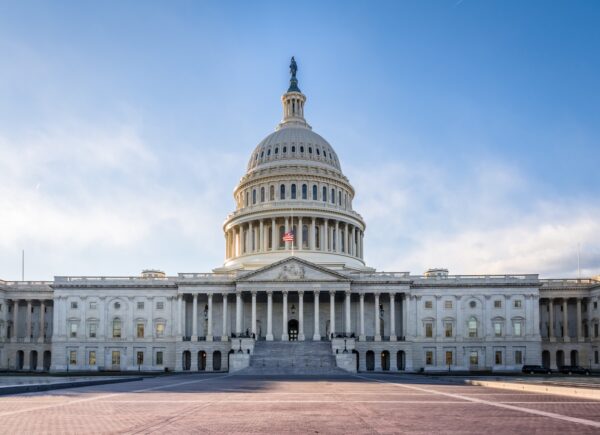
Democratic victories in the Nov. 3 midterm elections have shifted control of Congress, potentially changing how lawmakers approach federal agricultural policy and the economic challenges facing specialty crop growers.
With Democrats winning majorities in the House and Senate, the results could influence Farm Bill negotiations, agricultural labor reform and congressional oversight of the Trump administration’s agricultural assistance programs. Major legislative changes, however, would still require cooperation between Congress and the administration.
For fruit and vegetable growers, the transition comes amid rising fuel and fertilizer costs, labor challenges and uncertainty about federal assistance programs.
Agricultural organizations have called for long-term solutions, but questions remain about whether the incoming Congress will change existing policies or continue negotiations begun under Republican leadership.
Farm groups press Congress on rising costs
The National Farmers Union (NFU) urged lawmakers to address rising production costs, market concentration and trade uncertainty in a Nov. 4 statement following the elections.
Rob Larew, NFU president, said farmers had raised concerns throughout the election season about fuel and fertilizer costs, narrow profit margins and unpredictable trade policies.
“The campaigning is over, and the governing begins,” Larew said.
Larew called on lawmakers to modernize agricultural policy, strengthen the farm safety net and address competition in agricultural markets.
The statement also urged action during the remaining weeks of the current Congress and after newly elected lawmakers take office.
Larew’s comments reflect concerns that temporary assistance and existing federal programs have not adequately addressed the economic pressures facing producers.
Specialty crop relief payments remain uncertain
In the weeks before the midterm elections, the Trump administration announced approximately $15 billion in agricultural assistance and related initiatives intended to address fuel costs, expand agricultural financing and support domestic production.
The announcements came as farmers faced higher fuel, fertilizer, equipment and transportation costs. Associated Press reporting linked some of those pressures to tariffs and the war in Iran.
Among the announcements was USDA’s $8 billion Harvest Fuel Relief Program, introduced Oct. 19 to provide one-time payments to producers facing higher costs and market disruptions.
USDA had not finalized its payment methodology for specialty crops when the program was announced.
While USDA outlined payment calculations for traditional commodity crops, fruit and vegetable growers were asked to document increased fuel expenses to help inform specialty crop payment rates.
The lack of finalized payment details raised questions about whether specialty crop growers would receive assistance comparable to that available to other agricultural sectors.
In an Oct. 20 statement, NFU questioned how the program would serve specialty crop growers.
“We also have questions about how this program will serve specialty crop growers,” Larew said.
Larew said producers had been asked to provide cost information without clear guidance on whether or how they would qualify for assistance.
NFU also questioned whether repeated emergency payments could provide farmers with long-term financial stability.
The Washington State Potato Commission raised similar concerns in an Oct. 22 update, stating that payment amounts and timing for potato growers remained uncertain.
The commission said it would continue working with congressional representatives and USDA to ensure the program accounts for potato growers’ fuel costs and operational needs.
Federal assistance could provide short-term relief, but without finalized specialty crop payment details, growers cannot determine how much support they might receive.
That uncertainty matters for growers managing the costs of irrigation, harvesting, packing, cooling and transporting perishable crops.
Congressional oversight could focus on USDA relief
Democratic control of Congress could increase scrutiny of the Trump administration’s agricultural assistance programs, including whether recently announced relief measures adequately support specialty crop growers.
With majority control, Democratic lawmakers could use congressional hearings and information requests to examine USDA program implementation.
Such oversight could examine payment formulas, eligibility requirements and whether temporary assistance addresses production costs across agricultural sectors.
The administration has described its recent initiatives as substantial support for farmers. Brooke Rollins, USDA secretary, said the Harvest Fuel Relief Program would provide additional financial certainty during the 2026 harvest.
Agricultural organizations, however, have questioned whether one-time assistance can offset persistent production costs.
USApple has called for specialty crops to receive equitable treatment in federal assistance programs.
In its third-quarter 2026 policy update, USApple said it had joined nearly 50 agricultural organizations calling for additional economic assistance and inclusion of specialty crops in federal relief programs.
Congressional oversight could give growers additional opportunities to raise concerns about eligibility and the distribution of assistance. Whether those concerns lead to program changes would depend on subsequent legislative and administrative decisions.
Farm bill negotiations face a leadership change
The election results could also reshape farm bill negotiations if lawmakers fail to reach an agreement before the current Congress adjourns.
The incoming Democratic majorities would have greater influence over agricultural committee leadership and legislative priorities.
Those priorities could influence negotiations over specialty crop research, conservation, agricultural risk management, market development and federal nutrition programs.
The American Farm Bureau Federation has urged Congress to complete a bipartisan farm bill before the new Congress convenes.
In commentary published before the elections, Zippy Duvall, Farm Bureau president, identified a new farm bill, agricultural labor reform and economic assistance as congressional priorities.
USApple has also called for completing farm bill negotiations during the lame-duck session.
In its third-quarter policy update, USApple reported working with Senate Agriculture Committee leadership and other agricultural organizations to advance provisions benefiting apple growers and the broader specialty crop industry.
USApple identified the post-election session as an opportunity to pass a bipartisan farm bill that would provide producers with greater long-term certainty.
If negotiations extend into 2027, new congressional leadership could influence which provisions receive priority and how lawmakers balance agricultural and nutrition policy interests.
Agricultural labor reform faces an uncertain path
The change in congressional control could also influence agricultural labor reform.
Specialty crop growers rely heavily on seasonal labor, including workers employed through the H-2A temporary agricultural worker program.
Agricultural organizations have supported the Securing Agriculture’s Workforce Act, seeking changes to wage calculations, program administration and workforce availability.
USApple has supported the legislation and identified agricultural labor reform as a priority for the post-election congressional session.
Democratic control of Congress could shift labor negotiations toward greater consideration of worker protections, wage requirements and immigration policy, alongside growers’ concerns about rising labor costs.
Any legislation would need to balance those interests and secure sufficient congressional support and approval from the Trump administration.
For fruit and vegetable growers, the outcome could affect labor costs, access to seasonal workers and production planning.
What specialty crop growers should watch
Attention now turns to the lame-duck session, when outgoing lawmakers have a final opportunity to advance agricultural legislation before the new Congress takes office in January.
For specialty crop growers, the transition leaves several major policy questions unresolved.
Democratic control of Congress could change farm bill negotiations and renew debate over agricultural labor reform. Increased oversight could also put pressure on USDA to demonstrate how its assistance programs benefit specialty crop growers.
The Trump administration will continue overseeing USDA and implementing federal agricultural programs, meaning significant policy changes could require bipartisan compromise.
The election results alone will not resolve the financial pressures facing specialty crop growers.
For growers preparing for the 2027 season, the more consequential questions are whether lawmakers will finalize a farm bill, establish a workable agricultural labor framework and ensure federal assistance reflects the costs of specialty crop production.