

Florida blueberry meeting showcases smarter sampling, stronger varieties and disease defense
New insights on freeze tolerance, leaf rust and mid-season nitrogen testing can sharpen decisions. Read the takeaways and adjust your program.





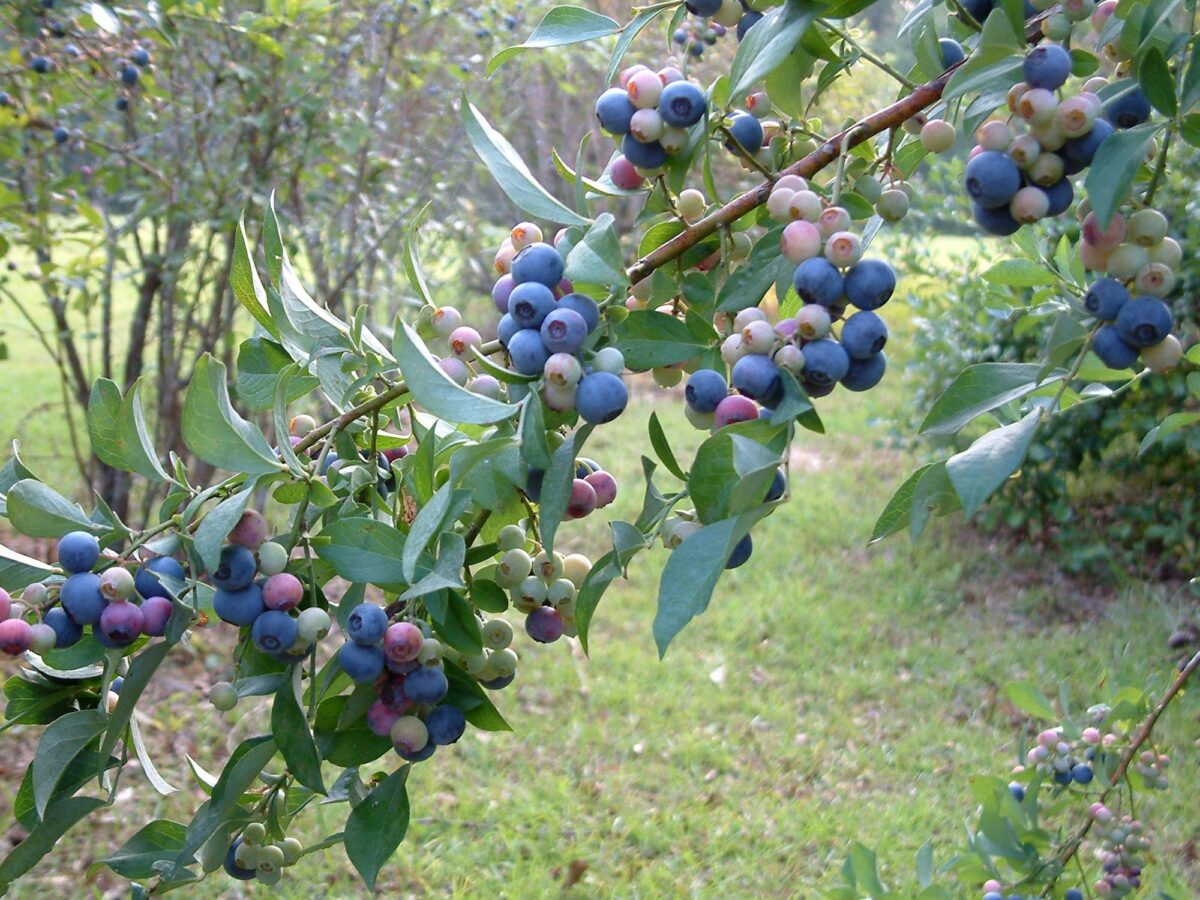
The day featured several research and industry updates from the University of Florida Extension Institute of Food and Agricultural Sciences (UF-IFAS). Attendees also toured blueberry research fields and networked with various industry stakeholders and service providers.
Here’s a quick glimpse of some of the research UF-IFAS provided to grower-attendees throughout the meeting:
Frozen berries: Tasty, but bad for growers
Gerardo H. Nunez, a UF-IFAS researcher, noted how much of the cold tolerance data used in the blueberry industry comes from northern regions such as Michigan, New Jersey and Washington. However, Florida’s productive southern highbush blueberry cultivars — developed by crossing cold-hardy northern plants with Florida germplasm — may respond very differently to freezing temperatures, Nunez said.
During the recent freezes, some farms reported temperatures near 19° F for several hours, according to Nunez. These same growers reported different levels of damage depending on the specific variety, plant development stage and weather conditions leading up to the freeze.
Nunez also highlighted the knowledge gap in understanding critical temperature thresholds for southern highbush blueberries grown in Florida.
Leaf rust update
Blueberry diseases — particularly leaf rust — were a major focus during another session, this one led by Philip F. Harmon, professor and extension specialist with UF-IFAS. Harmon shared updates on several fungal diseases affecting Florida blueberry production.
Leaf rust, he said, continues to be a concern.
The disease causes early leaf loss that can reduce flower bud formation, fruit quality and overall yield, according to Harmon. When leaves drop prematurely in the fall or winter, plants lose the ability to produce the sugars needed to properly fill fruit during the following season.
For growers managing foliar fungal diseases, Harmon’s recommendations include:
- Avoid overhead irrigation when possible
- Apply fungicides early in the disease cycle
- Follow label limits for seasonal use of active ingredients
- Rotate and tank-mix fungicides to help prevent resistance
Harmon explained how severe rust infections can also damage leaves by reducing photosynthesis and spreading thousands of airborne spores that infect new foliage. His team of researchers have also observed the fungal spores infect fruit, which creates additional pre- and post-harvest concerns for commercial growers.
Florida growers are acutely aware, having ranked anthracnose ripe rot and leaf rust among the most problematic blueberry diseases, followed by phytophthora root rot and bacterial wilt.
UF-IFAS researchers are evaluating more than 500 blueberry genotypes to identify plants with stronger natural resistance to rust. The goal, according to Harmon, is to help breeders develop future varieties that require fewer fungicide applications while maintaining strong yields and fruit quality.
Nitrogen rates get a fresh look
New research from UF-IFAS suggests blueberry growers in the Southeast may be using nitrogen benchmarks originally developed for farms in the PNW. Researcher Hanna de Jesus recently discussed new work examining nitrogen sufficiency ranges for southern highbush blueberries grown in Florida.
Many of the current nitrogen guidelines used in the Southeast trace back to research conducted in the Pacific Northwest. Those studies established a leaf nitrogen sufficiency range of about 1.7% to 2.1%, based on plant growth stages and sampling periods specific to northern highbush blueberries.
One key takeaway for growers, according to de Jesus: mid-season sampling between June and August produced the most stable nitrogen readings, making it the most reliable window for evaluating leaf nitrogen levels.
But Florida production systems operate very differently, de Jesus said.
Unlike northern blueberries, southern highbush plants grown in Florida remain active for much of the year, with vegetative growth, flowering and fruiting cycles overlapping. That difference can make nitrogen readings difficult to interpret when using reference values developed for other regions.
Using a dataset of over 1,800 leaf samples collected in Florida, researchers with UF-IFAS have developed nitrogen sufficiency ranges tailored specifically to southern highbush blueberry production.
The research leveraged artificial intelligence modeling to validate its findings, achieving more than 95% classification accuracy when identifying nutrient sufficiency categories across different growth stages.