






Oct 28, 2024
Vidalia onion grower A&M Farms trials tech, grows organics
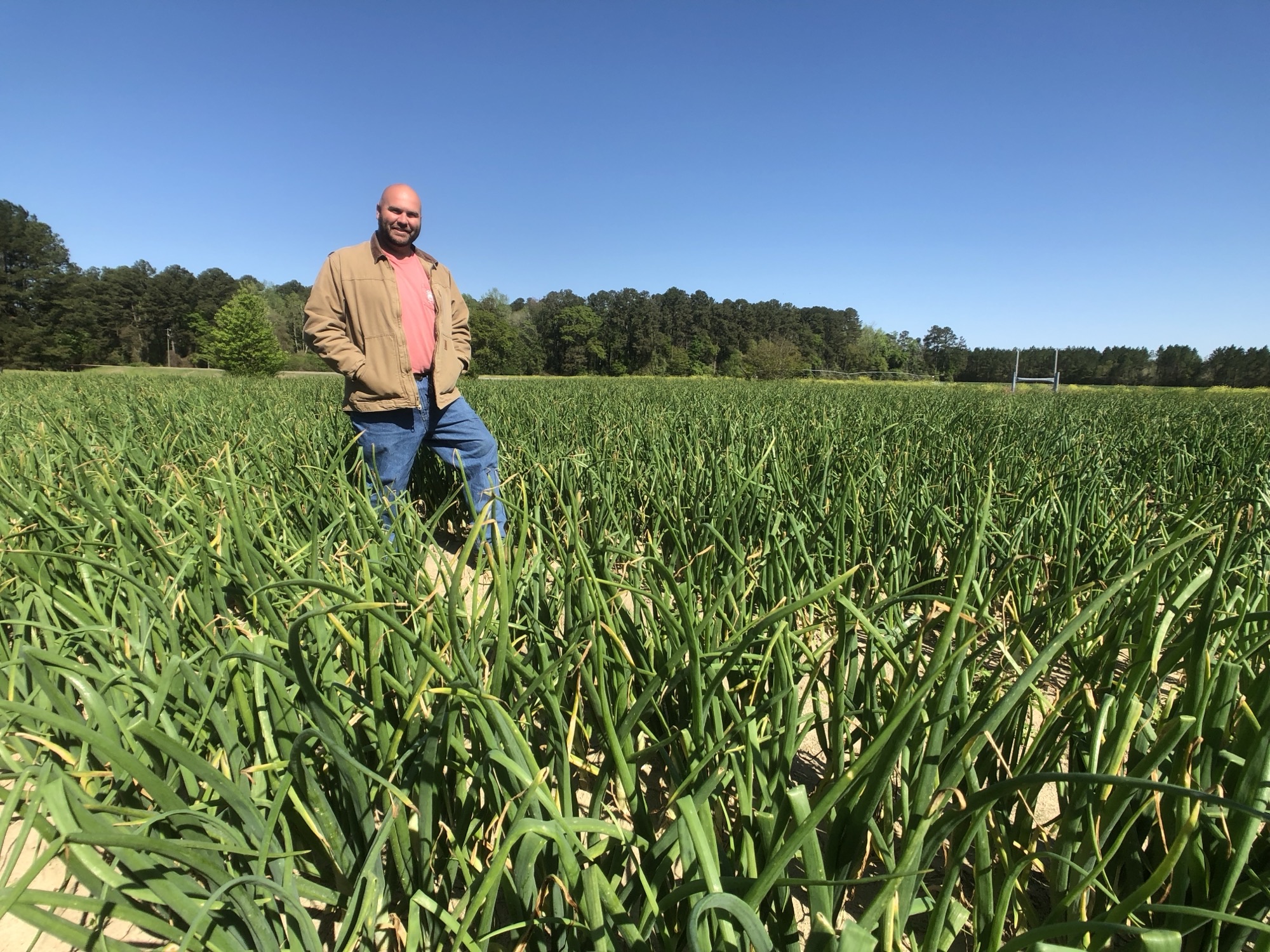
A&M Farms, a grower and shipper of conventional and organic Vidalia onions, employs technology, including autonomous robots, to successfully grow the Vidalia onion region’s famous sweet onions.
President Aries Haygood grows Vidalia sweet onions with his wife, Megan, company co-owner whose initials form the farm’s name. Although he grew up in the Vidalia region, Aries had never seen a Vidalia in the field until he married into the business.
Responding to market demand, A&M Farms began growing organic sweet onions in the mid-2010s.
“Organic definitely has its challenges,” Haygood said. “Weed control is one of them. For south Georgia, the first challenge is weed control.”
In onion fields, weed compete for nutrients the crop needs.
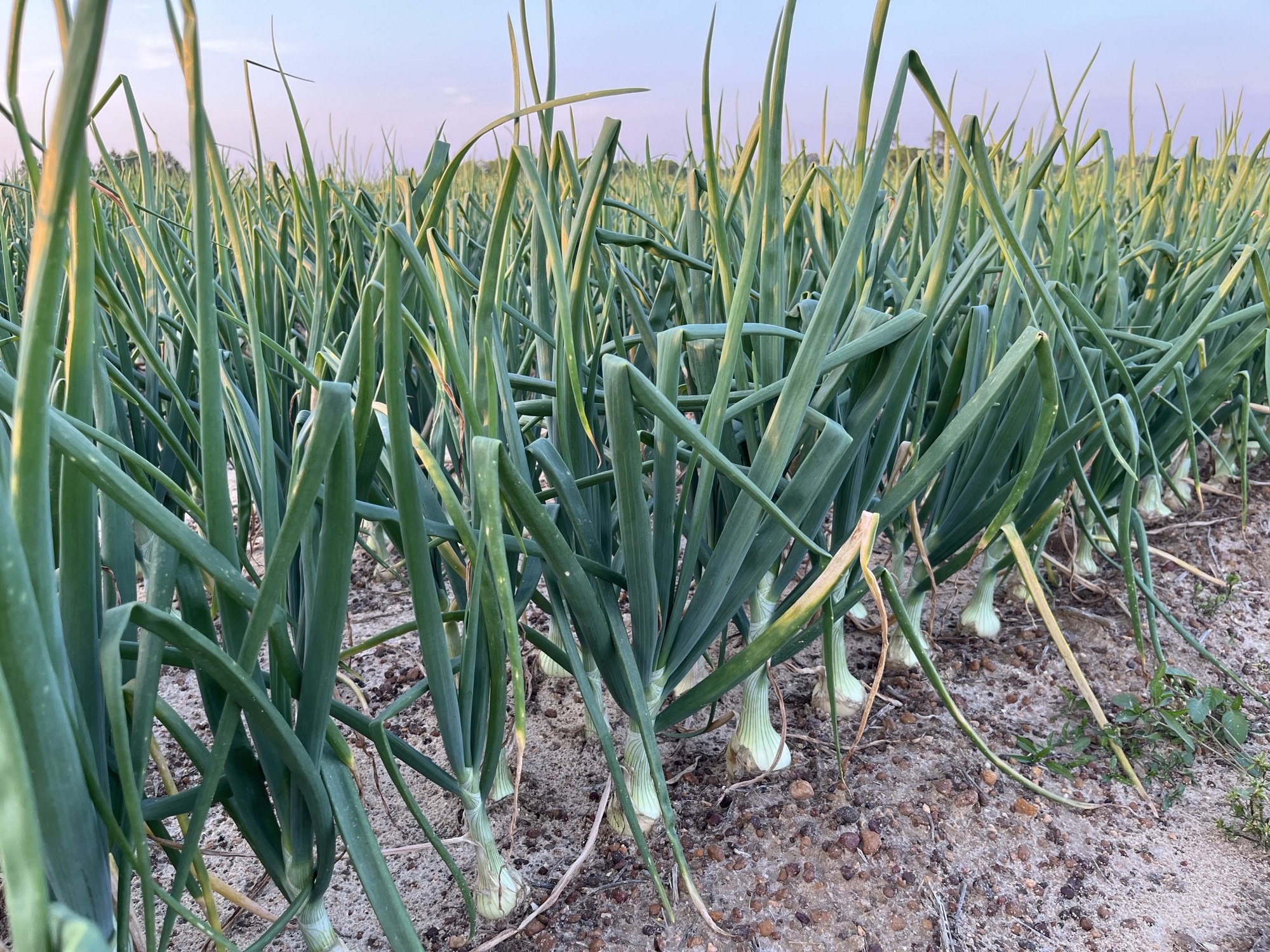
“Be prepared for when a disease comes in, and know what products you are allowed to apply to help slow the disease,” Haygood said.
He advises growers to carefully study organics before entering the segment.
“Definitely start off slow,” he said. “Research as much as you can, learn about the process and the area you’re growing in. See if others have made mistakes and the hard lessons they learned that they can share with you to help speed your time.”
Haygood also turned to organics for health reasons.
“Every year is a gone year,” the 41-year-old said. “If I live to be 80 and farm to the day I pass, I will have 40 more chances to try something new, to try to prove something to try to do something healthier.”
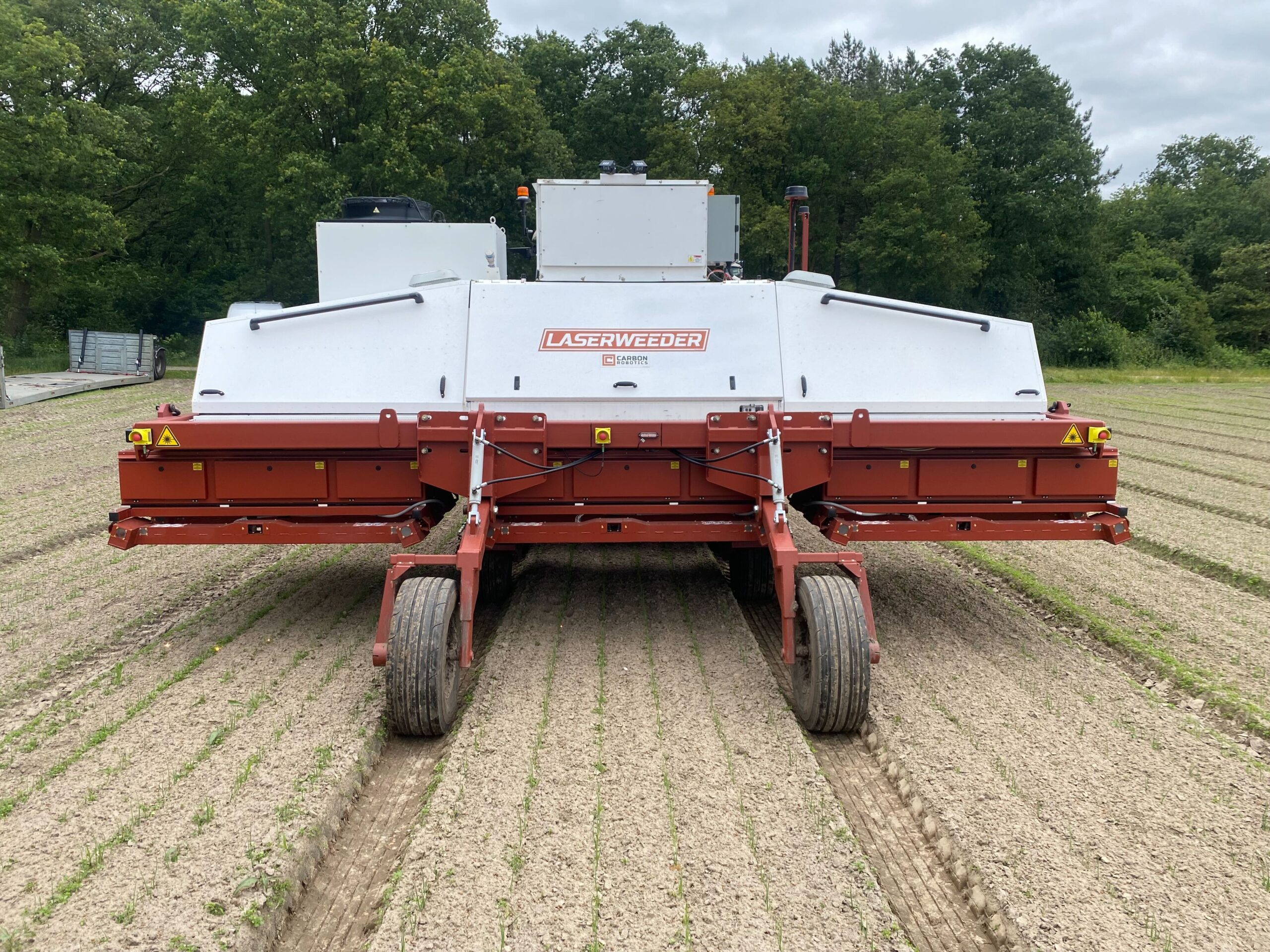
Since 2022, A&M Farms has been trialing Carbon Robotics’ LaserWeeder since 2022, starting with one of Haygood’s fields. At first, the automated laser weed remover was abnormally slow, but within five months its speed had doubled.
“Things like that will speed this whole industry’s acceptability of all this equipment,” Haygood said. “Once it gets to where a laser weeder can deliver three to four acres an hour, it will be able to cover a lot of ground in custom weeding.”
A robot in A&M’s packinghouse lifts cartons, stacks pallets and helps load trucks. While a learning process, the tech works well, Haygood said.
In the fields, expects automation and AI to handle chores like spotting crop health issues faster than the naked eye. Some systems, he noted, can zap more than 100,000 weeds an hour.
“It’s the way of the future,” he said. “It will allow for a job to be done with a lot fewer mistakes and more consistency. We couldn’t get enough help to afford and do that kind of work.”
Future tech
Haygood sees automation and AI reshaping agriculture much as they transformed the auto industry.
“Anytime things can be a little more consistent, being as precise as it can be, and level things out, it helps us all — and is important for consumers as well. It will eventually save us money,” he said.
A&M also uses drones to scout crops. The tech works well, and Haygood predicts improvements in cameras and data processing will make them even more effective. He envisions a strong future with AI and robots helping in growing and packing vegetables.
“We know the tech is there,” he said. “It’s getting it to process and training it to work faster so it can be more efficient.”
Battling onion thrips

The biggest pest threat to Vidalia onions is onion thrips, which feed on leaves and allow bacteria to enter through moisture.
Diseases such as botrytis and center rot also pose risks. Invisible to the human eye, center rot can break an onion’s neck and is usually detected only when plants are already in peril.
Haygood said he’s trying to guard against disease and pest threats by laying down clean seedbeds.
“No one wants any kind of pest or disease in the crop, but we’re learning when we have them, and have to figure out why they come and what we can do to stop them,” he said.
South Georgia’s climate adds to the challenge. Growers may find success with a method one year only to see it fail the next because of heavy rains and shifting weather patterns.
Soil matters
Haygood is also focusing more on soil health and looking at ways to reduce erosion through practices such as less tilling.

“The roots are basically the stomachs of our bodies,” he said. “If we provide good nutrition and healthy biology into the soil, then the roots living in the environment will take in the good stuff, which will make them healthier. Soil health is a lot bigger on my radar than it was in the past. I’m learning much more about it.”
Haygood said he’s also trying to avoid over fertilizing, which can affect the soil’s biology.
“There’s so much going on in soil we don’t think about,” he said. “We think about it as being dirt. We put a plant in there and are supposed to feed the plant everything it needs, but that’s not what’s going on. There’s a whole life going on underneath that is breaking down different products and organic matter, trading that for the nutrients the roots need. At the end of the day, we want plants to be as healthy as possible so when my daughters eat the plant, they will consume something as healthy as can possibly be grown.”
Weather remains Haygood’s biggest growing challenge. Growers can hit long cold, wet and dry spurts.
“With the onion, when you start adding more unpredictable weather events and patterns, it makes it more of a guessing game,” he said. “Our science and tech allow us to fertilize efficiently, spray products if we have to and help combat pests to buy some extra weeks worth of time. That tech is there, but the challenging part of everything is the weather. It’s just so unpredictable now and poses a bigger problem for us.”
Personal health and family legacy
In 2017, Haygood overcame aggressive stage 3B colon cancer. He said he was blessed by all the support he received.
“We often think it won’t happen to us,” Haygood said. “It was a humbling experience to see the outpouring of love and support.”
The experience led Haygood to become more interested in healthy eating and in making the onions he grows taste even better.
A&M sells its onions directly to consumers via its website vidaliaonions.com, which helps the farm personally connect with buyers.
Haygood met Megan at Georgia Southern University, where he earned a business and marketing degree. After selling insurance, he returned to Vidalia country in 2007 to work for his father-in-law Terry Collins, co-founder of M&T Farms.
He started at the bottom of the operation before advancing to general manager. In 2020, Aries and Megan purchased and renamed the company as A&M Farms.
Wanting to keep the family farming tradition going, Aries is trying to show his teenage daughters the numerous career opportunities offered in agriculture.
“If they don’t like seeing what I do, I at least want to get them to see the other aspects of ag,” he said. “We need the next generation of farmers to feed us. We’ve got to have food and water to provide us the essential items we need as a society to function.”
— By Doug Ohlemeier, Assistant Editor