
Data shows the organic sector thriving: USDA





Have you noticed, while in your local grocery store, that you have been seeing more organic products? This growing segment of agriculture is more prevalent now than it was just a decade ago and we have the data to show it.
First, it is important to note that organic is not just a label. Producers must adhere to strictly regulated processes and be vetted by USDA-accredited certifiers in order to receive the organic designation.
The USDA certified organic label gives farmers a strong marketing tool and offers consumers assurances that these products meet standards.
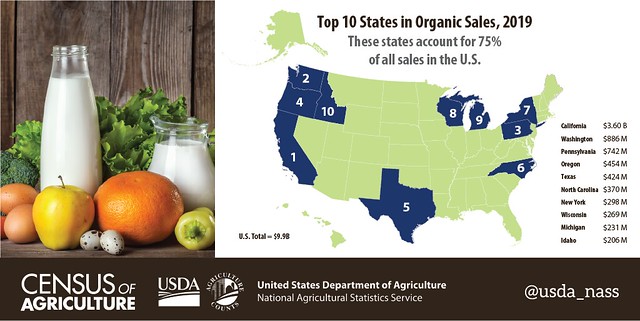
According to the recently released results of the 2019 Organic Survey, a 2017 Census of Agriculture special study, we can see a 17% increase in the number of certified farms in the U.S. between 2016 and 2019. In 2008, there were around 11,000 certified farms. Fast forward to 2019 and there are more than 16,500. If you look at sales, there was a 31% increase from 2016 to 2019. Total sales of organics in 2019 reached an all-time high of $9.9 billion.
Since the first NASS organic survey in 2008, the number of organic farms, the acres used for organic production, and the value of organic products sold have increased, with value of sales more than tripling between 2008 and 2019.
As a direct effect of this growth, the availability of certified organic commodities has increased. Organic farms reported $2 billion in direct sales to retail markets, institutions, and food hubs. Organic farms sold an additional $300 million directly to consumers.
Another highlight from the recent release shows California continuing its lead in organic production, with $3.6 billion in sales, or 36% of the U.S. total. That may not be surprising, but what if I told you it would take sales from the next eight states combined to beat California’s total? Or that organic milk and organically raised broiler chickens are the top two U.S. commodities with more than $1 billion each in sales? Fifty-eight percent of U.S. organic sales came from crops, with apples and lettuce leading with $475 million and $400 million in sales, respectively. Other top organic crops are grapes, strawberries, and corn for grain.
As you can see, organic is a thriving agricultural segment.
For more organic data, check out NASS’s Quick Stats online database or visit www.nass.usda.gov/organics. The 2019 Organic Survey is a complete inventory of all known organic producers who are certified, exempt from certification in the U.S., and those producers transitioning to certified organic production.
Learn more about what to expect in a USDA-certified organic product: www.ams.usda.gov/publications/content/whats-behind-organic-seal-organic-labels-explained.
If you are interested in becoming an organic farmer, check out our resources at www.ams.usda.gov/rules-regulations/organic.